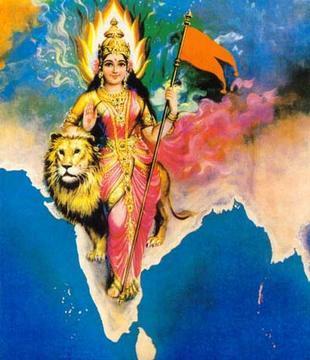
India
A land of beauty, A land of culture, A land which truly signifies UNITY Among DIVERSITY. A country which has the largest, oldest and continuous civilization in world. A country which is the largest democracy in the world. A country of people who truly believe in "Vasudhev Kutumbakam" meaning this whole world is a family. A land of "Vedas" which are the most ancient scriptures in the world. Vedas are written in "Sanskrit" the language which is mother to all the languages in the world. Sanskrit even today is considered most suitable language for computer software.
A civilization which despite being the richest and most advanced in past times never invaded other countries. A country that is proud to be the birthplace of Gautam Buddha, Mahavir Swami, Swami Vivekananda and Gandhi. A land of peace. A land of inventors who gave the world foundation to build all the scientific discoveries. A place which invented ZERO The place value system, the decimal system was developed in India in 100 BC. A land which gave birth to - Ayurved - The earliest school of medicine known to humans. Surgery was first performed by Sushruta about 2600 years ago.
Birthplace of Algebra, trigonometry and calculus. A country which gave the world - Chess the ultimate game of strategy.
A country which gave the world "Yoga". A country which was home to the World's first university established in Takshashila in 700BC, where more than 10,500 students from all over the world studied more than 60 subjects. The University of Nalanda built in the 4th century BC was one of the greatest achievements of ancient India in the field of education.
Even today a country which is fast emerging as world's superpower in Information technology. India is the only country other than US and Japan, to have built a super computer indigenously.Map Of India

"We owe a lot to the Indians, who taught us how to count, without which no worthwhile scientific discovery could have been made."
Albert Einstein
The beautiful subcontinent of India lies in south Asia, between Pakistan, China and Nepal. To the north it is bordered by the world's highest mountain chain, “The Himalayas”. It has plateaus, tropical rain forests, sandy deserts and is bordered by palm fringed beaches. Just like the staggering topographical variations it has its cultural diversity. One one hand India has the towering temples of south India and on the other in the desert of Kutch, Gujarat, a scattering of villages stand stoutly against the awesome forces of nature, resulting in Spartan lifestyles made vibrant by a colorful jewelry and embroidery of clothes. In the extreme north is the high altitude desert of Ladakh where local culture is shaped by the faith (Buddhism) and by the harsh terrain. On East corner live the tribes of the north eastern states of Nagaland, Mizoram, Tripura and Manipur with their colorful folk culture.
India's history goes back to several thousand years BC when Hinduism was first founded. Buddhism, Jainism, Sikhism all were founded in India. Today India has true multi religional face as Hinduism, Jainism, Islam, Christianity, Sikhism and Buddhism all exist in harmony. Modern India is home alike to the tribals and to the sophisticated urban jetsetters. It is a land where elephants and cars both travel on road amicably.
National Flag

India’s National flag is a horizontal tricolor of deep saffron (kesari) at the top, white in the middle and dark green at the bottom in equal proportion. It is called “Tiranga Jhanda”. The ratio of width of the flag to its length is 2:3. In the centre of the white band is a navy blue wheel, which represents the Ashoka Chakra. Its diameter approximates to the width of the white band and it has 24 spokes.
National Anthem
The song “Jana-gana-mana”, composed originally in Bengali by Rabindranath Tagore, was adopted in its Hindi version as the national anthem of India. It was first sung on 27 December 1911 at the Calcutta Session of the Indian National Congress. The complete song has five stanzas but only the first stanza was adopted as National anthem.
Jana-gana-mana-adhinayaka, jaya he
Bharata-bhagya-vidhata.
Punjab-Sindh-Gujarat-Maratha
Dravida-Utkala-Banga
Vindhya-Himachala-Yamuna-Ganga
Uchchala-Jaladhi-taranga.
Tava shubha name jage,
Tava shubha asisa mage,
Gahe tava jaya gatha,
Jana-gana-mangala-dayaka jaya he
Bharata-bhagya-vidhata.
Jaya he, jaya he, jaya he,
Jaya jaya jaya, jaya he!
জনগণমন-অধিনায়ক জয় হে.
ভারতভাগ্যবিধাতা
পঞ্জাব সিন্ধু গুজরাট মরাঠা
দ্রাবিড় উৎকল বঙ্গ
বিন্ধ্য হিমাচল যমুনা গঙ্গা
উচ্ছল জলধি তরঙ্গ
তব শুভ নামে জাগে
তব শুভ আশিস মাগে
গাহে তব জয়গাথা
জনগণমঙ্গলদায়ক জয় হে
ভারতভাগ্যবিধাতা
জয় হে, জয় হে, জয় হে,
জয় জয় জয়, জয় হে॥
জনগণমন-অধিনায়ক জয় হে.
ভারতভাগ্যবিধাতা
পঞ্জাব সিন্ধু গুজরাট মরাঠা
দ্রাবিড় উৎকল বঙ্গ
বিন্ধ্য হিমাচল যমুনা গঙ্গা
উচ্ছল জলধি তরঙ্গ
তব শুভ নামে জাগে
তব শুভ আশিস মাগে
গাহে তব জয়গাথা
জনগণমঙ্গলদায়ক জয় হে
ভারতভাগ্যবিধাতা
জয় হে, জয় হে, জয় হে,
জয় জয় জয়, জয় হে॥
The following is Tagore’s English rendering of the anthem:
Thou art the ruler of the minds of all people,
dispenser of India’s destiny.
Thy name rouses the hearts of Punjab, Sind, Gujarat and Maratha,
Of the Dravida and Orissa and Bengal;
It echoes in the hills of the Vindyas and Himalayas, mingles in the music of Jamuna and Ganges
and is chanted by the waves of the Indian Sea.
They pray for thy blessings and sing thy praise.
The saving of all people waits in thy hand,
thou dispenser of India’s destiny.
Victory, victory, victory to thee.
National Emblem

The State emblem is an adaptation from the “Sarnath Lion” Capital of Ashoka. In the State emblem, only three lions are visible, the fourth being hidden from view. The wheel appears in relief in the centre of the abacus with a bull on right and a horse on left and the outlines of other wheels on extreme right and left. The words Satyameva Jayate from Mundaka Upanishad, meaning ‘Truth Alone Triumphs’, are inscribed below the abacus in Devanagari script.
NATIONAL SONG
The song “Vande Mataram”, composed in Sanskrit by Bankimchandra Chatterji, was a source of inspiration to the people in their struggle for freedom. It has an equal status with “Jana-gana-mana”. The first political occasion when it was sung was the 1896 session of the Indian National Congress. Only the first 2 stanzas are adopted as national song. The following is the text of this song in original.
Vande Mataram!
Sujalam, suphalam, malayaja shitalam,
Shasyashyamalam, Mataram!
Shubhrajyothsna pulakitayaminim,
Phullakusumita drumadala shobhinim,
Suhasinim sumadhura bhashinim,
Sukhadam varadam, Mataram!
Vande Mataram!
Following is the English translation of the stanza rendered by Sri Aurobindo.
I bow to thee, Mother,
richly-watered, richly-fruited, cool with the winds of the south,
dark with the crops of the harvests, The Mother!
Her nights rejoicing in the glory of the moonlight,
her lands clothed beautifully with her trees in flowering bloom,
sweet of laughter, sweet of speech,
The Mother, giver of boons, giver of bliss.
National Animal

The magnificent tiger, Panthera Tigris (Linnaeus), is a striped animal. It has a thick yellow coat of fur with dark stripes. The combination of grace, strength, agility and enormous power has earned the tiger its pride of place as the national animal of India. Indian race, the Royal Bengal Tiger, is found throughout the country except in the north-western region and also in the neighboring countries, Nepal, Bhutan and Bangladesh.
National Bird

The Indian peacock is the national bird of India. It is a colorful, swan-sized bird, with a fan-shaped crest of feathers, a white patch under the eye and a long, slender neck. The male of the species is more colorful than the female, with a glistening blue breast and neck and a spectacular bronze-green train of around 200 elongated feathers. The elaborate courtship dance of the male, fanning out the tail and preening its feathers, is a gorgeous sight. The peacock is widely found in the Indian sub-continent. The Peacock enjoys protection from the people as it is never molested for religious and sentimental reasons.
National Flower

Lotus is the National Flower of India. It is a sacred flower and occupies a unique position in the art and mythology of ancient India and has been an auspicious symbol of Indian culture since time immemorial.
National Languages
Hindi is the official and main link language of India. Its homeland is mainly in the north of India, but it is spoken and widely understood in all urban centers of India. It is written in the Devanagri script, which is phonetic and, unlike English, is pronounced as it is written. Hindi is a direct descendant of Sanskrit through Prakrit and Apabhramsha. It has been influenced and enriched by Dravidian, Turkish, Farsi, Arabic, Portugese and English.
In all there are 22 languages recognized by the Indian Constitution. These languages are
- Assamese
- Bengali
- Bodo
- Dogri
- Gujarati
- Hindi
- Kannada
- Kashmiri
- Konkani
- Maithili
- Malayalam
- Manipuri
- Marathi
- Nepali
- Oriya
- Punjabi
- Sanskrit
- Santhali
- Sindhi
- Tamil
- Telugu
- Urdu
National Fruit

A fleshy fruit, eaten ripe or used green for pickles etc., of the tree Mangifera indica, the mango is one of the most important and widely cultivated fruits of the tropical world. Its juicy fruit is a rich source of Vitamins A, C and D. In India there are over 100 varieties of mangoes, in different sizes, shapes and colours. Mangoes have been cultivated in India from time immemorial.
National Calendar
The national calendar is based on the Shaka Era with Chaitra as its first month. A normal year of 365 days was adopted from 22 March 1957 along with the Gregorian calendar. Dates of the national calendar have a permanent correspondence with dates of the Gregorian calendar: 1 Chaitra falling on 22 March normally and on 21 March in leap year.
"If there is one place on the face of the earth where all the dreams of living men have found a home from the earliest days when man began the dream of existence, it is INDIA."
Romain Rolland, French Scholar

![[gayitri+mantra++.JPG]](https://blogger.googleusercontent.com/img/b/R29vZ2xl/AVvXsEiwq1Ru7JSINvBiNSQJxoUQK7ciFxphCPqEpsV3Tkv3yGPV_7dAEC8bPcEUIEdoQ9RhFRcSnS9u2qeF_Xn-TKSBg4wPkJ9ouNx2nU1Lr9daEEYeMjC-hXILpcHcpd2bfBjtZturdo9Zr0EG/s1600-h/gayitri+mantra++.JPG)
.JPG)


![[dadu.jpg]](https://blogger.googleusercontent.com/img/b/R29vZ2xl/AVvXsEiwUJtNU2fzA6x_0USt3c9D1s-B73NdTu-MTTZtKW7LOryzbkG2__XiyppD1kbgk1e9_yhfXSZId7hk8LuOXVa_vLGimj-O-tXW_ipsROpBvbOtRsxtzytROUN-RnFl2HKez2zkgcV3P5MR/s1600-h/dadu.jpg)